
In this week’s issue of The Savvy Diabetic:
-
- MiniMed FDA cleared for next-gen Flex insulin pump
- Frequent Insulin Infusion Site Failures ‘a Huge Problem’
- Type 1 Diabetes Linked to Threefold Increase in Dementia Risk
- Upcoming Guidance (Off-Label Use) to Address GLP Drugs in T1D
- Smartwatch & bg data combine to predict insulin resistance
- Upcoming Guidance (PERT) to Address GLP Drugs in T1D
- Heart benefits fade after stopping GLP-1 medications
- Accuracy of ChatCGP Use in Carb Estimation: Use with caution!
- Cool Tools for Diabetes: 2026 Updates
MiniMed wins FDA clearance for next-gen Flex insulin pump by Sean Whooley for DrugDeliveryBusiness.com, 18 March 2026.MiniMed announced today that it received FDA clearance for the MiniMed Flex next-generation insulin pump.
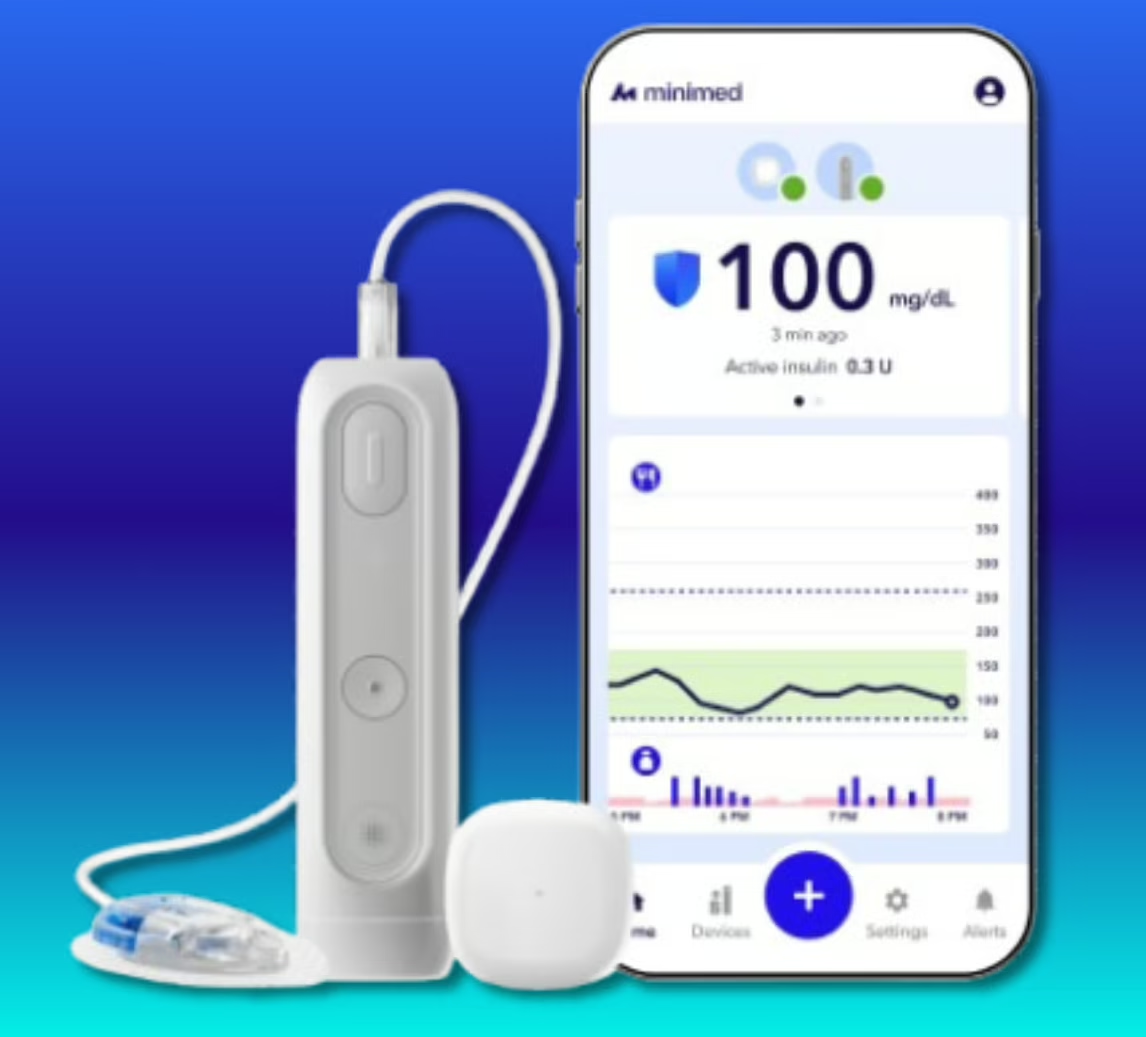 Flex, a discreet, smartphone-controlled insulin pump, was designed by the company — which just went public as part of its separation from Medtronic — to seamlessly fit into everyday life. Clearance covers individuals aged 7 and older with type 1 diabetes and individuals 18 and older with insulin-requiring type 2 diabetes.
The MiniMed Flex (8 series) pump is much smaller than the previous-generation 780G (about half the size), allowing for more discrete placement while still using the same reservoirs and infusion sets. It will work with both the Simplera Sync and Instinct (made by Abbott) sensors. MiniMed submitted the pump to the FDA during the third quarter.
Key features include the small, sleek design that still enables high insulin capacity. Its design enables users to wear it wherever they prefer, whether in a pocket, out of sight, or elsewhere. The pump still delivers a 300-unit insulin reservoir to support a range of insulin needs. Smartphone control through a compatible mobile app eliminates the traditional pump screen, the company says. It also offers seamless software updates through both iOS and Android devices at launch. The pump also has compatibility across two sensor options at launch to provide choices for users.
Read more; MiniMed wins FDA clearance for next-gen Flex insulin pump
Frequent Insulin Infusion Site Failures ‘a Huge Problem’ by Nancy A. Melville for Medscape.com, 18 March 2026.
 Unexplained hyperglycemic episodes in patients with type 1 diabetes (T1D) who are using automated insulin delivery (AID) systems may be a sign of undetected occlusions, new data showed. In addition, the study found that alarms designed to alert patients of the occlusions only did so in a small fraction of cases, posing potential health risks and taking a toll on patients’ well-being.
“There is certainly a need for patient education and improved occlusion detection technology to address the gap between clinical [hyperglycemic] events and device notifications,” said first author Lori Laffel, MD, MPH, a professor of pediatrics at Joslin Diabetes Center, Harvard Medical School, in Boston, who presented the findings at 19th International Conference on Advanced Technologies and Treatments for Diabetes (ATTD) 2026.
In a separate talk at the meeting, Irl B. Hirsch, MD, a professor of medicine at the University of Washington in Seattle, highlighted the extent of the problem. He cited recent research showing that as many as 41.4% of patients with T1D using AID systems, also from the TD Exchange, reported one or more insulin infusion site failures per month. The study also found that such failures are most commonly detected as the result of the development of hyperglycemia, rather than from a device’s occlusion alert.
“That is a lot of failures,” Hirsch asserted. It’s “a huge problem,” he added. “This is the true Achilles heel and while [there are] a lot of new insulin pumps, nobody talks about this.” At the crux of the occlusions are the body’s responses to various components of the insulin systems, including repetitive microtraumas which trigger an immune response, leading to the activation of lipohypertrophy, and the formation of scar tissue, Hirsch explained.
“Chronic inflammation leads to fibrosis and fat necrosis, which cannot absorb insulin efficiently and increases the physical risk of catheter kinking,” he said. Furthermore, “the combination of inflammatory cell buildup and protein aggregation can clog the cannula, leading to total or partial occlusion.”
Read more: Frequent Insulin Infusion Site Failures ‘a Huge Problem’
Type 1 Diabetes Linked to Threefold Increase in Dementia Risk by Kristen Monaco for MedPage.com, 19 March 2026.
 Older adults with type 1 or type 2 diabetes had a higher risk of dementia, a U.S. prospective cohort study found. Compared with people without diabetes, older adults with type 1 diabetes had a nearly threefold higher risk for incident all-cause dementia. An estimated 64.5% of dementia cases in people with type 1 diabetes could be attributed to the condition, Jennifer Weuve, MPH, ScD, of Boston University School of Public Health, and colleagues reported in Neurology. “As advances in medical care have extended the lives of people with type 1 diabetes, it’s becoming increasingly important to understand the relation of type 1 diabetes to the risk of dementia,” she added.
In type 1 diabetes, however, hypoglycemic events may drive dementia risk by causing neuronal damage through altered glucose metabolism, insulin insufficiency, or oxidative stress and inflammation in the hippocampus.
“Although type 2 diabetes entails insulin resistance and hyperglycemia, type 1 diabetes may present a unique set of risks, in part due to the autoimmune destruction of beta cells,” Weuve’s team noted. “These mechanisms should be further explored.”
Read more: Type 1 Diabetes Linked to Threefold Increase in Dementia Risk
Upcoming Guidance (Off Label Use) to Address GLP Drugs in Type 1 Diabetes by Miriam E. Tucker for Medscape.com, 16 March 2026.
 New guidance on the use of GLP-1-based drugs in people with type 1 diabetes (T1D), due to be published later this year, will address the safety and optimal use of these medications which are currently used off-label in this patient population.
Although the use is off-label, it has been increasing in recent years, particularly as an adjunct to insulin in people with T1D who also have obesity and/or cardiovascular disease, said Satish K. Garg, MD, professor of medicine and pediatrics at the Barbara Davis Center for Diabetes, University of Colorado, Denver, who presented an overview of the upcoming guidelines at 19th International Conference on Advanced Technologies and Treatments for Diabetes (ATTD) 2026.
“In the old days, we used to be told people with type 1 diabetes are lean and thin and will never get overweight and obese. That was, in fact, one of the ways to distinguish people with type 1 and type 2 diabetes. Unfortunately, that is no longer the case,” Garg said.The upcoming Adjunctive Treatment with GLP/GIPs for Patients with T1D: A Consensus Report and Guidelines for Safe Use, will be published in the June 2026 issue of the ATTD journal Diabetes Technology and Therapeutics, for which Garg is editor-in-chief.
-
-
-
- Start slow and adjust the GLP-1/glucose-dependent insulinotropic polypeptide (GIP) doses gradually. The full dose for T1D may not need to be as high as that typically used for T2D and obesity.
- Insulin dose should be titrated carefully to avoid hyperglycemia, ketosis, diabetic ketoacidosis, and hypoglycemia. The typical recommendation is to cut the insulin dose by 20%, but that may vary among individuals.
-
-
Read more: Upcoming Guidance to Address GLP Drugs in Type 1 Diabetes
Smartwatch and blood test data combine to better predict insulin resistance and diabetes by Krystal Kasal for MedicalxPress.com, 17 March 2026.
 Around 20–40% of the general population are estimated to have insulin resistance—a condition where insulin begins to be less effective in the body, and glucose regulation becomes more difficult. A new study, published in Nature, outlines a method combining smartwatches and routine blood tests to better detect insulin resistance in its early stages, and its early validation testing has shown good accuracy.
The research team put together the Wearables for Metabolic Health (WEAR-ME) study, incorporating data from wearable smartwatches and routine blood testing of cholesterol, insulin and glucose, along with health and lifestyle questionnaires. Results showed that the multimodal model predicted insulin resistance with high accuracy. When the model was fine-tuned with a wearable foundation model (WFM) pretrained on 40 million hours of sensor data, accuracy improved even further. “The results provide further evidence that data from wearables provide considerable added value in predicting IR, even when the model is applied to previously unseen data.
Read more: Smartwatch and blood test data combine to better predict insulin resistance and diabetes
Upcoming Guidance (PERT) to Address GLP Drugs in Type 1 Diabetes by Nancy A. Melville for Medscape.com, 16 March 2026.
 Pancreatic enzyme replacement therapy (PERT) — commonly used to reverse the insufficient secretion of pancreatic enzymes, or pancreatic exocrine insufficiency (PEI) — showed benefit in the treatment of side effects associated with the use of GLP-1 receptor agonists (RAs) and GLP-1/GIP RAs, according to the results of a new study.
“PERT appears to be a promising adjunct therapy for managing gastrointestinal [GI] symptoms associated with GLP-1-RAs,” first author Idit Dotan, MD, of the Institute of Endocrinology, Diabetes and Metabolism, Rabin Medical Center, Beilinson Hospital, Petah Tikva, Israel, said in presenting the findings at the 19th International Conference on Advanced Technologies and Treatments for Diabetes (ATTD) 2026.
“Integrating PERT into treatment regimens may improve patient tolerance for GLP-1-RAs, supporting their long-term use in diabetes and obesity management,” she said. The delayed gastric emptying and altered nutrition absorption occurring with treatment with GLP-1 and GLP-1/GIP RAs can result in functional PEI, or an “asynchronization between food transport and pancreatic secretions,” Dotan explained.
Read more: Pancreatic Enzyme Replacement Therapy for GLP-1 Symptoms?
Heart benefits fade after stopping GLP-1 medications by Brenda Goodman for CNN.com, 18 March 2026.
 One major benefit of taking injected GLP-1 medications is a sizeable reduction in risk for heart attacks, strokes and other heart problems. However, if people stop taking the medication, those heart benefits are erased.
A large new study has found that heart risks begin to return as soon as six months after stopping the drug and may be almost completely eclipsed as soon as a year and a half after stopping. The study authors said they believe coming off the drug creates a kind of “metabolic whiplash.” After stopping, the heart benefits seemed to be reversed more quickly than it took to get them in the first place, said study author Dr. Ziyad Al-Aly, who is a clinical epidemiologist at the Washington University School of Medicine in St. Louis.
“It takes a whole lot longer to build or accrue benefit, and then half as much to erase all that benefit,” said Al-Aly, who is also chief of the Research and Development Service at the VA Saint Louis Health Care System.
Read more: Heart benefits fade after stopping GLP-1 medications
Two Studies on the Accuracy of ChatCGP Use in Carb Estimation: Use with caution!
Evaluating Accuracy of ChatGPT-4o in Automated Carbohydrate Estimation From Images as a Self-Management Tool for Adolescents With Type 1 Diabetes, published in the Journal of Diabetes, Science and Technology, 28 February 2026 by PubMed: doi: 10.1177/19322968261424270.
Introduction: Online ahead of print.Type 1 diabetes mellitus (T1D) requires precise carbohydrate estimation to manage blood glucose and prevent chronic and acute complications to hyperglycemia or hypoglycemia. This study evaluates the accuracy of ChatGPT in estimating carbohydrate content in images of meals, compared with the considered gold standard of manually counting carbohydrates.
Conclusion: This study suggests that adolescents living with T1D should employ ChatGPT-4o for carbohydrate estimating with caution. ChatGPT-4o showed inaccuracies in its application to composite meals, increasing the risk of inaccurate insulin administration and potentially causing postprandial hyperglycemia or hypoglycemia.
*********************************************************************
An Evaluation of ChatGPT for Nutrient Content Estimation from Meal Photographs published in Nutrients, 7 February 2025 for PubMed:doi: 10.3390/nu17040607
Background/Objectives: Advances in artificial intelligence now allow combined use of large language and vision models; however, there has been limited evaluation of their potential in dietary assessment. This study aimed to evaluate the accuracy of ChatGPT-4 in estimating nutritional content of commonly consumed meals using meal photographs derived from national dietary survey data.
Conclusions: ChatGPT performed well for identifying foods, estimating weights of small portion sizes, and ranking meals according to nutrient content, but performed poorly for estimating weights of medium and large portion sizes and providing accurate estimates of nutrient content.
Read more:
Cool Tools for Diabetes: 2026 Updates by Marissa Hitchcock for ChildrenwithDiabetes.com, 19 September 2023, updated for 2026.
There are so many newer tools to help you manage your/your child’s diabetes that it is hard to keep up with the available options. There are also companies that let you personalize your diabetes devices and add a little fun and whimsy into your life.


-
-
-
- Glucose Displays: Glowcose, SugarPixel, Glucose Projector
- Insulin Storage Solutions: Frio, Insulin Saver, T1D 3D Gear
- Reducing Pain with Injections: Nouchie, Buzzy-Bee,
- Other Diabetes Gear: Sugar Medical (cases and accessories), Deck My Diabetes (cases & storage)
- Adhesives and Skin Solutions
- Diabetes Travel or Storage: One 2 One Diabetes (upscale bags), Sugar Medical
-
-
Read more: Cool Tools for Diabetes: 2026 Updates

